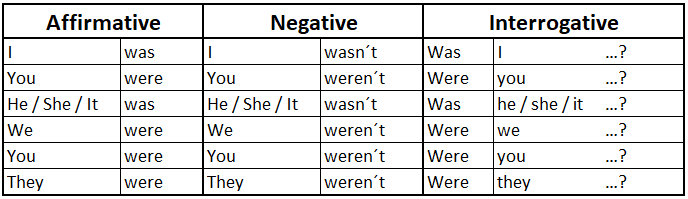
The past form of the BE verb, also known as the past simple form, is an essential component of the English language. It’s used to describe completed actions or states of being in the past. In this blog post, we’ll delve deeper into the past form of the BE verb, its usage, and examples, while following the best SEO practices.
The past form of the irregular verb BE for singular subjects is “was,” and for plural subjects, it’s “were.” Here are some examples of sentences using the past form of the BE verb:
- I was happy to see you yesterday.
- They were at the concert last night.
- He was not feeling well this morning.
Look also at:
Usage of Past Form of BE Verb:
- To describe a past state of being: We use the past form of the BE verb to describe a state of being or a situation in the past. For example, “I was tired after a long day at work,” or “She was a great singer when she was younger.”
- To describe completed actions in the past: We use the past form of the BE verb to describe completed actions in the past. For example, “They were at the party last night,” or “He was not able to attend the meeting yesterday.”
- To form negative statements: We use the past form of the BE verb to form negative statements in the past tense. For example, “She was not happy with the result,” or “They were not able to finish the project on time.”
- To form questions: The past form of the BE verb is also used to form questions in the past tense. For example, “Were you at the gym yesterday?” or “Was the concert good?”
Examples of Past Form of BE Verb:
- She was a great dancer when she was younger.
- They were not able to finish the project on time.
- I was happy to see you last week.
- He was not feeling well yesterday.
- Were you at the party last night?
- Was the movie good?
What you might also be interested in:
Conclusion:
The past form of the BE verb is a crucial component of the English language, used to describe completed actions or states of being in the past. By understanding its usage and examples, you can improve your ability to communicate effectively in English. Whether you’re speaking, writing, or reading, being familiar with the past form of the BE verb can help you express yourself with clarity and accuracy.