Verbs in past perfect

10/10 - (7 votes)

Verbs in the English language can be classified into regular and irregular verbs based on how their past tense forms are created. Let’s explore how to form verbs in the past perfect tense and categorize them accordingly. Regular verbs in past perfect Regular verbs in the past perfect tense had followed a predictable pattern. The… Continue reading Verbs in past perfect

Published
Categorized as Tenses

Regular verbs: past and past participle

10/10 - (2 votes)

Mastering regular verbs is a fundamental step in learning English. Unlike irregular verbs, which change in unpredictable ways, regular verbs follow a consistent pattern when forming their past tense and past participle. This consistency makes them easier to learn and use effectively. What are regular verbs? Regular verbs are verbs that form their past tense… Continue reading Regular verbs: past and past participle

Published
Categorized as Grammar

Irregular verbs: past and past participle

10/10 - (4 votes)

Mastering irregular verbs can be one of the more challenging aspects of learning English. Unlike regular verbs, which follow a predictable pattern when forming their past tense and past participle (e.g., “work” becomes “worked”), irregular verbs do not conform to a single rule. Understanding the past participle form of these verbs is crucial for effective… Continue reading Irregular verbs: past and past participle

Published
Categorized as Grammar

50 Examples of sentences in the past perfect continuous tense

10/10 - (1 vote)

The past perfect continuous tense (also known as the past perfect progressive tense) is used to express an action that began in the past and continued up to another point in the past. This tense is utilized in English to highlight the duration of an action and is very useful for emphasizing the continuity of… Continue reading 50 Examples of sentences in the past perfect continuous tense

Published
Categorized as Tenses

Past perfect continuous structure

10/10 - (3 votes)

In the realm of English grammar, the past perfect continuous tense serves as a profound tool to describe actions or events that had been ongoing before another point in the past. This tense, also known as the past perfect progressive, requires a good understanding of its structure to be used effectively in communication and storytelling.… Continue reading Past perfect continuous structure

Published
Categorized as Tenses

Examples of affirmative sentences in the past perfect continuous tense

10/10 - (2 votes)

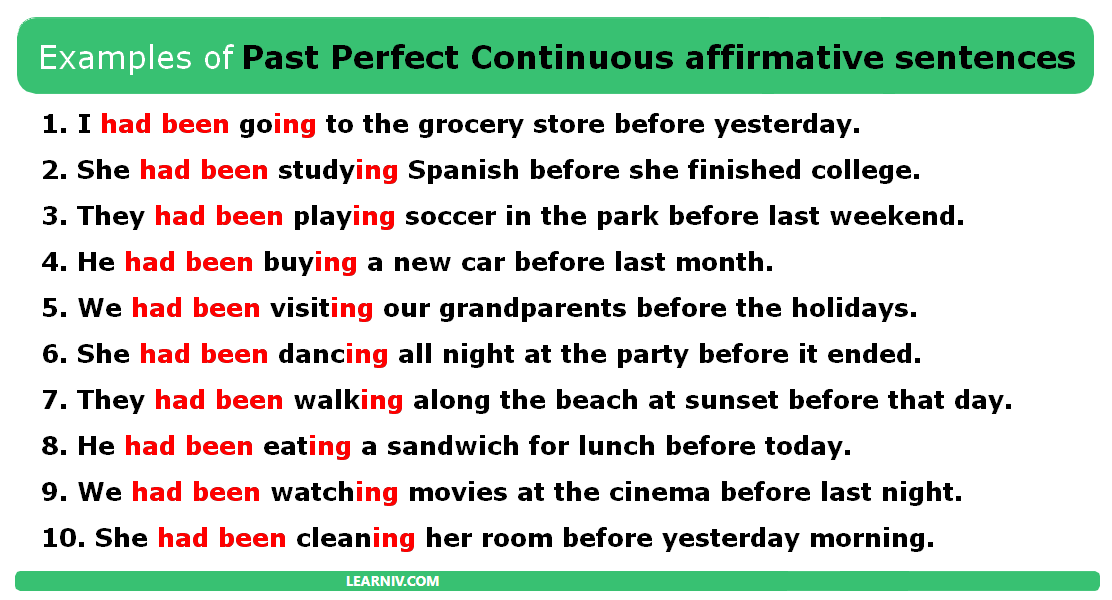
Here are ten examples of affirmative sentences in the past perfect continuous tense, describing activities that were ongoing up until a certain point or event in the past: I had been going to the grocery store before yesterday. She had been studying Spanish before she finished college. They had been playing soccer in the park… Continue reading Examples of affirmative sentences in the past perfect continuous tense

Published
Categorized as Tenses

Examples of interrogative questions in sentences using the past perfect continuous tense

10/10 - (4 votes)

Here are ten examples of positive interrogative sentences in the past perfect continuous tense, which formulate questions about activities that were ongoing up until a certain point or event in the past: Had I been going to the grocery store before yesterday? Had she been studying Spanish before she finished college? Had they been playing… Continue reading Examples of interrogative questions in sentences using the past perfect continuous tense

Published
Categorized as Tenses

Examples of negative sentences in the past perfect continuous tense

10/10 - (3 votes)

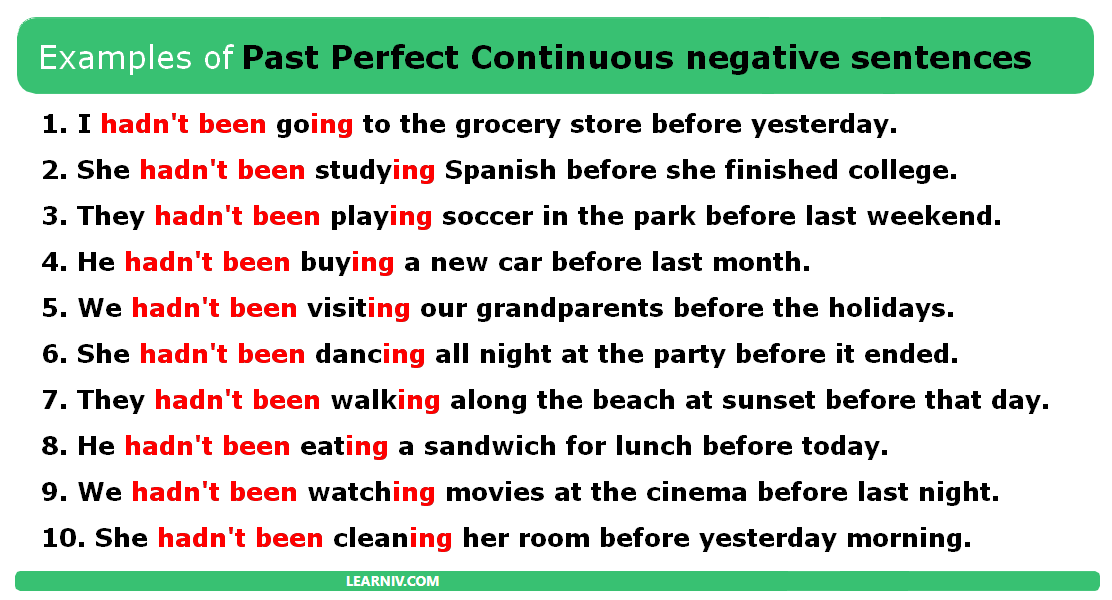
Here are ten examples of negative sentences in the past perfect continuous tense: I hadn’t been going to the grocery store before yesterday. She hadn’t been studying Spanish before she finished college. They hadn’t been playing soccer in the park before last weekend. He hadn’t been buying a new car before last month. We hadn’t… Continue reading Examples of negative sentences in the past perfect continuous tense

Published
Categorized as Tenses