When delving into the intricacies of the English language, one might encounter the term “past perfect subjunctive.” Although it may sound complex, understanding its usage can significantly enhance your ability to express nuanced ideas, particularly in formal or hypothetical contexts.
What is the past perfect subjunctive?
The past perfect subjunctive is a verb form used to express unrealized conditions or wishes related to the past. It allows speakers to discuss hypothetical situations or to express regrets and desires about things that did not happen.
Usage of the past perfect subjunctive
-
Hypothetical situations in the past:
The past perfect subjunctive is often used in third conditional sentences, which describe events that did not occur and their possible consequences. This form helps to illustrate what could have happened under different circumstances.
Examples:
- If he had known about the meeting, he would have attended.
- If I had studied harder, I might have passed the exam.
-
Wishes regarding the past:
This form is also used to express wishes or regrets about past events. It helps convey a sense of longing for an alternative reality where things happened differently.
Examples:
- I wish I had known about the party.
- She wishes she had taken the job offer.
Forming the past perfect subjunctive
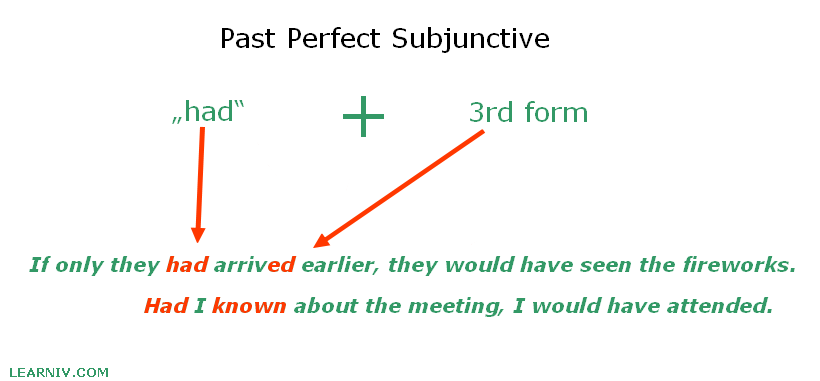
To form the past perfect subjunctive, you use “had” followed by the past participle of the main verb. It shares the same grammatical structure as the past perfect indicative, but its usage and context set it apart.
Examples:
- If only they had arrived earlier, they would have seen the fireworks.
- Had he apologized, she would have forgiven him.
Why learn the past perfect subjunctive?
Understanding the past perfect subjunctive can significantly improve your English communication skills, particularly in writing and formal speech. It allows you to:
-
Express complex ideas:
Mastering this form enables you to convey detailed and sophisticated thoughts, particularly when discussing unrealized scenarios or reflecting on past actions.
-
Enhance persuasion:
Using the past perfect subjunctive can make your arguments more compelling by clearly illustrating hypothetical outcomes and regrets, which can be particularly useful in storytelling and persuasive writing.
-
Improve fluency:
Familiarity with various verb forms, including the past perfect subjunctive, helps you become a more versatile and confident English speaker.
Practice makes perfect
Like any aspect of language learning, mastering the past perfect subjunctive requires practice. Here are a few tips to help you get started:
-
Read extensively:
Pay attention to how authors use the past perfect subjunctive in literature and journalism. This can provide you with context and examples to emulate in your own writing.
-
Write regularly:
Try writing sentences or short paragraphs using the past perfect subjunctive. Consider hypothetical scenarios or reflect on past regrets to practice this form.
-
Engage in conversations:
Practice using the past perfect subjunctive in conversations with native speakers or fellow learners. Discuss hypothetical situations or past experiences to reinforce your understanding.
By incorporating the past perfect subjunctive into your English skills repertoire, you open up new possibilities for expressing yourself more accurately and effectively. Remember, consistent practice and exposure are key to mastering this and any other grammatical structure in English.
How the past perfect tense and past perfect subjunctive are related
The past perfect tense and the past perfect subjunctive are closely related because they both use the same grammatical structure, which is “had” + past participle. The difference between them lies primarily in their context and usage. Let’s take a closer look:
Past perfect tense
The past perfect tense is used to indicate an action that was completed before another action in the past. This tense allows us to clearly specify which of the past actions happened first.
Past perfect subjunctive
The past perfect subjunctive is used to express hypothetical situations, unrealized conditions, or wishes related to the past. This tense enables us to talk about what would have happened if certain conditions had been met.
How they are Related:
- Grammatical structure: Both tenses use the same structure: “had” + past participle. For example:
- Past perfect tense: She had finished her work.
- Past perfect subjunctive: If she had finished her work, she would have joined us.
- Temporal context: The past perfect tense tells us that one action was completed before another action in the past. The past perfect subjunctive allows us to talk about hypothetical or unrealized situations that would have occurred before other past actions.
- Usage in sentences:
- The past perfect tense is used in narrative or descriptive sentences to show that one action preceded another.
- The past perfect subjunctive is used in conditional sentences and when expressing wishes, enabling us to discuss situations that did not happen but could have under certain conditions.
Example sentences:
- Past perfect tense:
- She had already eaten when I arrived.
- They had completed the project before the deadline.
- Past perfect subjunctive:
- If they had completed the project on time, they would have received a bonus.
- I wish I had studied harder for the exam.
In conclusion, the past perfect tense and the past perfect subjunctive share the same grammatical structure but differ in their usage. The past perfect tense is used to describe the chronology of past events, while the past perfect subjunctive is used to express hypothetical situations and wishes related to the past.